There’ll be plenty of opportunities to share experiences and ideas with your peers and other knowledge and information leaders and practitioners, and consider psychological safety for knowledge sharing in a very practical context.
It was a delight to speak with Dave Wilson of Tiger Eye Consulting earlier this month on the topic of collaboration, conversation and knowledge sharing in these difficult times.
What problems are many law firm KMers experiencing at the moment?
Initially many law firm leaders and KMers struggled with getting all their fee earners working safely from home – getting decent, healthy, safe office spaces set up and connecting them appropriately and safely to the confidential and other information/knowledge necessary for their work.
Now that the vast majority of organisations have overcome this challenge, they are turning their attention to challenges of a completely different kind – how they can improve the trusting networks inside their organisation when people can’t interact in their usual ways.
We can’t rely on the informal interactions that happen naturally when people work together in the same office: the commuting buddies, the conversations in lifts/loos/kitchens/corridors. And we are realising how important those “in-between interactions” are for supporting and building the kind of trusting networks where knowledge can flow.
It is very natural, when most people in an organisation are working virtually/from home, for strong relationships to get stronger and weak ones to get weaker and even sometimes fall away and fail completely. If we are to connect people to the best experts and encourage the most complex knowledge to flow around our organisation, we have to be far more deliberate in our network-building and trust-building activities than we have needed to be previously.
What can people do to boost the strength of the network and relationships inside their organisation?
Some of the simple things that people can do to improve the reach of their network and the numbers of links between people are:
Entirely random connections – RCT (Random Coffee Connections 101) or “pass the parcel” networking (a variant with fewer and slower connections, which might suit some businesses better) or lunch fours (random lunches rather then coffee, with larger groups);
Team connections – tea & biscuits Thursday – a short team meeting with no work-based discussions, just catching up and getting to know each other, and, in difficult times, support for each other;
Cross silo connections for other purposes – make full use of other in-house groups (women lawyers, BAME networks, yoga Tuesday etc) and charitable fundraising groups;
and of course there’s nothing wrong with a traditional in-house newsletter/e-mail.
We also need to work on the quality of those links and boost trust between people. Some of the things that we can do to improve that are:
Communicate openly, making information symmetrical, and have a clear shared-purpose with explicit standards and expectations to minimise politics.
Share credit and recognition and model best behaviours for others. People take their lead from what is tolerated, rather than what is written or said about how behaviours ought to be.
Focus on similarities rather than differences, but remain open-minded about how very different people’s experiences can be of the same role in the same company at this time. People used to be able to separate their work and home issues, but they simply crowd together now. People’s homes may be very different to yours (affecting ability to work comfortably) and their families and support network may be very different to yours (working with toddlers, teenagers or a difficult partner in the house) or they may have worries that you hadn’t realised they had (grown children at a covid-hit University, elderly parents in a care home, dear friends who are cancer-survivors etc). The more diverse your organisation is, the more likely you are to understand these differences, but even in less-diverse organisations, you can take the time to consider how your actions and expectations might be affecting these types of situations (and *ask* people).
And when things get difficult, coach each other kindly but openly and utilise all resources inside the organisation, delegating and calling on support as needed. Don’t be shy about it, people like leaders who admit to not knowing and being human.
For more help on creating trust, read “Smart Collaboration” by Dr Heidi Gardner and “The Fearless Organisation” by Dr Amy Edmondson. Neither books are specifically on trusting KM networks, but both are great books on (respectively) successful collaborative teams and creating a culture where people can fearlessly speak up*.
There was more in our recorded conversation, but in the meantime, what are you doing to improve the trusting network inside your organisation, to improve knowledge sharing and collaboration? I’d love to hear in the comments.
I’d be really interested to know what you are all doing to help your peers to:
recognise the value of their knowledge and when it is needed,
ameliorate a fairly natural reluctance to offend the boss (or be wrong or stand out), and
share concerns, questions, mistakes or half-formed ideas.
Thoughts in the comments (don’t be afraid of being wrong, offending someone or standing out and remember that we all want to benefit from your knowledge!)or if you can’t share, spend some time today thinking about what you can do differently to support people in their fearless knowledge sharing.
If this post has made you think, follow the blog (button at the top right), or sign up for the busy person’s summary or join the book club.
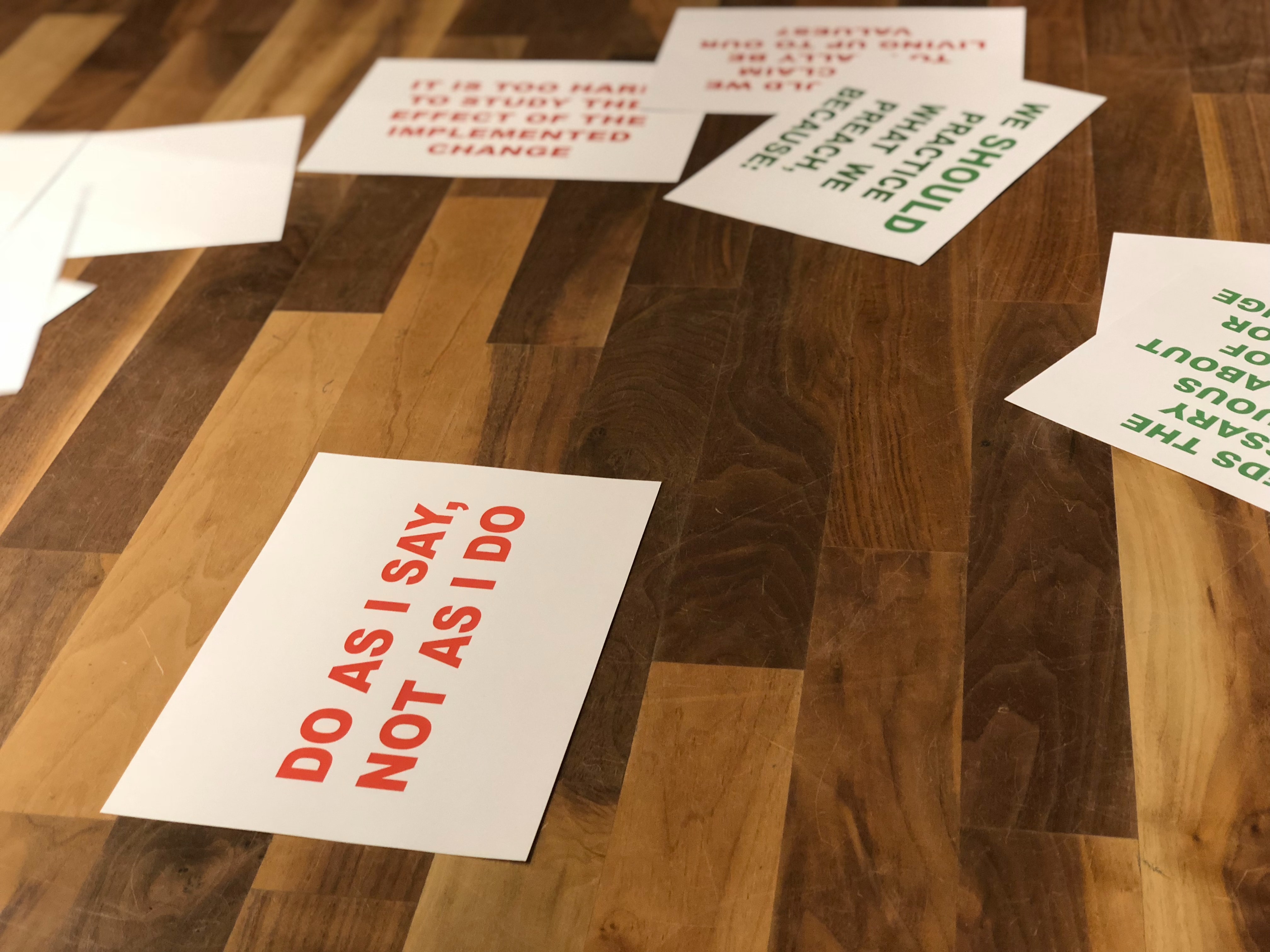
It’s an important one for getting people onside and building trust. If you can’t practice something yourself, you shouldn’t be preaching it to others.
But what about preaching what you practice too?
You need to lead by demonstrating the importance of a work practice (such as curiosity about negative events or taking time for knowledge sharing) but you also need to ensure that people *hear* about this practice too.
This isn’t about excessive pride or crowing about your successes, it is about sharing best practices, making sure that everyone understands how to achieve the most that they can in their work and helping your organisation to deliver on its strategy.
If you want to improve how you make your work more visible, start here:
Rachael Wheatley spoke to my Bristol KN-UK group about value – this is a review of her training event
And if you like the idea of KN-UK, drop me an email and I’ll let you know all about it. It’s a great way to get affordable training and discussion opportunities, and to build a supportive network.
At the Knowledge and Information Management group at CILIP (of which I’m Chair) we’ve got some fantastic value webinars coming up which might be of interest to you, whether you are a CILIP person or not.
The theme for the Autumn/October series is “Career success in difficult times” and covers the following topics:
Resilience
Making a success of hybrid (home-office) teams
Perfectionism and procrastination
The whole series (all three hour-long events) is only £25+VAT for CILIP members and £50+VAT for non-members. Given the usual cost of resilience workshops alone, this is fantastic value.
They will be delivered via Zoom and the focus is on the challenges of information and knowledge managers, but they could be of interest to anyone.









 Knowledge for Lawyers