Understanding clients

You probably realise that client satisfaction affects the amount of write offs on bills, but did you know that it also has an effect on how *quickly* your bills get paid too?

Yesterday I was at our KN-UK Bristol talk on new ways to engage with clients, understand their needs and adapt law firm processes to meet those needs, with Mark West of Integreon. For me personally, it was interesting on two levels: I got some great ideas for my own business and also learned more about what law firms can do to understand their clients and keep them happy, so that I can help their PSLs, Knowledge Lawyers and Business Development Lawyers with new ways to interact and help out.

There were too many useful ideas to repeat them all here, but I think my personal top takeaways were:

  • the importance of understanding why you are investigating client voices and experiences, which can help you with defining your SMART goals, budget etc;
  • segment your clients into groups (not just demographics, groups which make sense for your business) – you will probably want to investigate different aspects with different segments or try to achieve different goals;
  • watch out for unintended consequences – just as with measurement of KM projects, you can end up with unwanted unintended results if you focus too much on simple quantitative metrics – keep a balance with qualitative (whilst avoiding creating survey-fatigue);
  • you want to create actionable feedback, so start with understanding the key attributes to a great service, keep drilling down and act on the result – for example, don’t ask about “knowledge”, ask about knowledge of a client’s particular sector and then act on the result by sending relevant marketing only and developing solutions to that sector’s biggest problems; and
  • try to use a variety of sources to build a more detailed picture of a client’s journey – create a log and keep adding evidence and reviewing – this helps you avoid knee-jerk reactions to problems, blaming individuals or getting complacent, and helps avoid those unintended consequences.

There were also lots of great, detailed top tips to help with practice and a lot of discussion about individuals’ own challenges.

Mark has kindly agreed to run this talk for our Birmingham group as well. It’ll be on Tuesday 13th September 12.30-2.30 at Gowling wlg’s offices. I heartily recommend it. Don’t simply leave this stuff to the marketing department: all lawyers, information professionals, KMers and PSLs have an important role to play as well. Book here.


We have one more session at Bristol’s KN-UK in September on understanding lawyers so you can work alongside them more effectively. If you are interested in coming along, let me know.

By the end of the year Bristol annual pass holders have received 10 hours of quality tailored training for £250, covering international management, leadership and influencing, understanding the media, understanding clients and understanding lawyers. In addition, they have the opportunity to buy discounted tickets to events in Birmingham and Manchester and access to exclusive discounts. If you think you or your firm may be interested in joining KN-UK, drop me a line and join the KN-UK mailing list to be kept up to date.

Posted in Knowledge Network UK, Professional Support Lawyers | Tagged , , , , , | Leave a comment

How much you care ….

how much you care

Posted in Client-facing KM, quotes | Tagged , , | 1 Comment

Amnesty’s revolution against FGM and child marriage

Not exactly a “KM in a law firm” topic, but  …

Because I feel strongly about this campaign, I’ll be donating £50 for each TKB in-house training event booked until 18th July, whether you book a whole day or a lunchtime.

You can read more and download my current list of training events here.

And of course you don’t need to book a training event to help. You can donate directly to Amnesty, or find out more, here.

Posted in The Knowledge Business, Training and learning | Tagged , , , , | Leave a comment

Conversation creates innovation

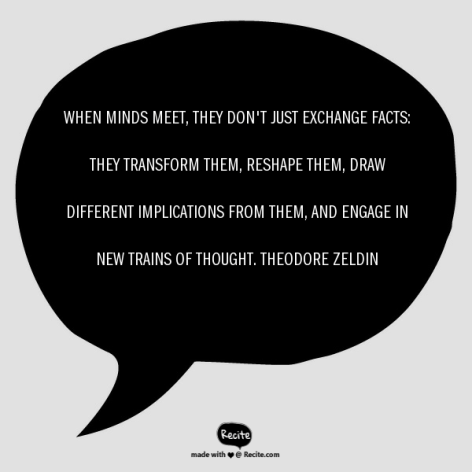
conversation2

Posted in quotes | Tagged , | Leave a comment

How to write in plain English

Did you know that …

80% of lawyers think their writing is above average
when in fact …
only 5% of their clients agree!

Yesterday, Sarah Fox, 500 word lawyer, spoke to my Birmingham KN-UK group on writing in plain English. It was a fantastic session. Sarah started with this rather shocking statistic, which shows that there is clearly a problem in the way law firms communicate with their clients. Being generally risk averse, lawyers prefer to avoid change, but writing poorly must cost them money.

How can they/we improve the standard of writing in law firms?

write

Sarah has already done some comprehensive guest posts for me on writing in plain English, which you can access here https://knowledge4lawyers.wordpress.com/tag/writing/ including her useful WRITE acronym.

In addition, I think I particularly took the following away from our session yesterday:

  • The importance of considering, not just the audience for your work, but who they may share it with, what emotional state they may be in when they receive your writing, and whether your writing is going to have an emotional impact on them, which could affect communication of salient issues. This may not be a particular problem for my blog posts, but it could be a major issue for those writing complex reports to clients with sensitive problems, such as those involved in clinical negligence claims.
  • Being brief does not mean being short, it means including only what is necessary (I’m terrible for trying to anticipate my reader’s every need and writing waaaay too much) and writing clearly does not mean dumbing down.
  • It is quicker to write all of your piece in one swoop, take a break (preferably overnight if it is an important piece of work) then edit as a separate activity. Try not to edit as you go. It takes longer in the end.
  • Editing should be undertaken in 3 separate stages (in this order): copy, scrutiny, proof. Try not to jump straight into proof-reading, you only waste your time.
  • Structure – think about the different types of structure and choose one which is suitable for your piece of writing in particular. Make maximum use of headings and BLUF (bottom line up front).

If you are interested in learning more about writing in plain English, you could

  • ask Sarah to come to speak to your firm (I heartily recommend her),
  • read a textbook or two (Sarah recommended Brian Garner, Joseph Kimble, Ken Adams),
  • have a look at the Plain English Campaign and Clarity, and some of the software which can score your readability (such as Style Writer), and
  • most importantly, be brave and begin a dialogue with your clients about what they want. You may want to impress them with your stylistic prowess or worry about changing an old formula or precedent, but if this means your clients take their business elsewhere or waste your time with hundreds of non-chargeable follow-up questions, this is costing your business money!

I’m sure we all had slightly different takeaways. If you were there, maybe you could add yours in the comments?

And if you are interested in cost-effective quality lunchtime training such as this, consider joining KN-UK in Bristol, Birmingham or Manchester. Our next training session in Bristol is on understanding clients and our next Birmingham session is on change management.

If you’d like to keep up with what is happening at KN-UK, consider joining our mailing list.

Save

Posted in Knowledge Network UK, Training and learning, writing | Tagged , , , | 3 Comments

Leadership and Influencing

We had a very interesting KN-UK session yesterday on leadership and influencing with Carol Skolimowski of CAPCC, which included a wide-ranging discussion touching on managing millenials, encouraging women into leadership and herding cats.

leadership1

I imagine everyone’s takeaways were different, but these are my top ten:

  1. We are all on a journey learning our leadership capabilities, some people start with natural skills, but we can all learn/improve.
  2. We need to understand ourselves first – our values, un-crossable lines and emotional triggers.
  3. We need to spend time investigating and understanding those whom we are trying to influence – their needs, triggers and the language/goals/outcomes they find most useful and persuasive. Our organisation may have a mission statement but how do our individual roles fit with that statement? Our purpose must be aligned, but it will be different in each team. It needs to “ring true” with team members.
  4. The importance of honesty, communication and authenticity, and the value of building trust.
  5. Always have an objective, strategy and tactical plan for how you will undertake important influencing projects.
  6. Be brave – offer your expertise where you can help your organisation, don’t wait to be asked.
  7. Be tactical – ask for help in influencing, use the help of your allies and try to understand those who don’t yet “get it”, and consider the timing of your conversations.
  8. Be present – positive energy and conversation pay dividends, so don’t think there isn’t time for it.
  9. Be authentic – when necessary, express your frustration at not being able to help the business with your expertise.
  10. The impotance of reflective and continuous learning.

If you were there, what were your top 3 takeaways?

If you weren’t there, what would you add and what are your own top tips for influencing and leading? Or your top challenges?

Find out more about what Carol does and how she could help you and your organisation here.

And don’t forget that KN-UK annual members benefit from a discounted trial coaching session with Carol, if they want to give it a try.

If you would like to learn more about KN-UK and our fantastic value regional training for law firms and KMers, have a look at our website and our programme of events for Bristol, Birmingham and Manchester.

If you would like to get emails and reminders about KN-UK, you can sign up here. We also run an annual best practice survey, which is always interesting, so why not sign up so you can take part?

Save

Save

Posted in influencing, Knowledge Network UK, Training and learning | Tagged , , , | 4 Comments

Up-coming training

A quick round-up of up-coming training events:

  • Wednesday 8th June, 12.30-2.30, Bristol – “Who is leading who? a workshop on leadership and influencing by Carol Skolimowski, CAPCC
  • Tuesday 14th June, 12.30-2.30, Birmingham – “Avoid lethal writing” a training lunch on writing in plain English by Sarah Fox, 500 word lawyer
  • Wednesday 22nd June, 12.30-2.30, Manchester – “Measuring KM Projects” a training lunch on how to measure the success of your KM projects by me, Helene Russell, author of KM Handbook and Practical Projects in Law Firm KM
  • September (tba) “KM The Works” – your day-long foundation course in law firm KM by Helene Russell

You can enroll for most of these either through Eventbrite, or by emailing me.

To keep up with Knowledge Network UK events,  join our mailing list.

To keep up with my TKB open training events as well as a summary of the articles/blog posts I’ve written, join my monthly busy-person’s round-up.

Posted in Events, Knowledge Network UK, skills, Training and learning | Tagged , , , , | Leave a comment

Trust yourself …

trustyourself

Posted in Personal Knowledge Management, quotes | Tagged , | Leave a comment

KM Fundamentals

I’ve been updating my slides for my KM: The Works session next Wednesday (25th May – I have a cancellation, so one spot left, so if you want it, hurry & book).

This made me think back to some of the KM fundamentals posts which I’ve written in the past.

I thought it’d be useful to bring some of them all together in one place for you.

When should KM become a priority?
Getting started with KM
Best at the basics
Starting out

So what “basics” topic do you think is missing? If you are new to law firm KM, what topic would you like me to write about next? Let me know in the comments section.

Posted in KM, Training and learning | Tagged , | 1 Comment

Conversation – a mini e-book

I talk endlessly about the importance of networks and conversation for efficient knowledge sharing within organisations, and I’ve written before about RCTs and serendipitous conversations.

I’ve brought these thoughts together into a little mini e-book (more an e-chapter) which you can download from my slideshare account.

Enjoy!

If you’ve used the RCT project or something similar in your firm, I’d love to hear from you (in the comments below or email me).

And if you think this is a useful little book, please share it using the social buttons below.

Posted in Training and learning | Tagged , , , , | 1 Comment