
Sign up for the busy-person’s monthly summary, or follow the blog (button at top right).
After our successful session in Birmingham, I have persuaded Dr Sheffield to run another innovation workshop in Bristol after the summer.
Come along if you are interested in

If you are an existing annual subscriber to KN-UK Bristol, this is included in your membership. If you aren’t, but would like to come along anyway, you can buy tickets via Eventbrite. There are limited numbers (KN-UK events are always small, friendly and interactive), so if this is of interest, book asap.
For those of you who can’t get to Bristol, keep an eye on the blog (you can follow it using the top right button) or sign up for the busy person’s monthly summary, and read about the session afterwards.
And if you have any great experiences to share about innovation in your firm, I’d love to hear it in the comments below.
For our next Head of Knowledge interview, we meet Richard Gaston who is Head of Knowledge and Research at Addleshaw Goddard LLP.
1) How did you end up as Head of Knowledge? Was there a key factor / turning point in your ending up in this role?
I joined Addleshaw Goddard with a background in business information, research and  analysis, and came to help build out this capability in what was then the Information Services team. I was subsequently fortunate to be given, and to be able to find, a number of opportunities to expand the scope of my role. In early 2016 I presented a paper written with the help of our PSL team to our Exec – we sought (and were given) Exec sponsorship for KM, as well as recognition that effective KM was essential for successful delivery of the Firm’s strategy.
2) What job did you envision having when you were young?
A marine archaeologist! I was inspired by watching Blue Peter and seeing the dives on, and recovery of, the Mary Rose.
3) If you could have any job in the world, with no limitations (salary, location, hours etc) what would you do?
I still have a lingering hankering to be an academic – if I could combine that with 6 months of the year spent in Florence, and 6 months of the year in the UK…that might be my ideal job.
4) Describe your organisation in three words
Collaborative. Innovative. Growing.
5) What is the hardest thing about your role?
Raising and maintaining the profile of our KM work alongside the many competing priorities facing our fee-earning and business services colleagues.
6) What is the best thing about your role?
People! I have a great team, and the opportunity to work with lots of people in lots of different roles across the business, as well as with our clients.
7) What is the biggest change that you’ve witnessed during your career in Knowledge?
As with almost every other profession, the impact of technology. I started my career learning how to search print indices, and run command-line searches on elementary online databases. Technology has revolutionised our ability to manage and find accurate information.
8) What three things are you focusing on for the next three years?
Development of our KM people. Document automation. Search.
9) What do you think is the most exciting new development coming in Knowledge work / KM?
Developing technologies mean a greater focus and more time available to spend on what I think are the more important (and human) factors in KM – developing knowledge-sharing cultures and KM people, adding value and insight to the information we manage.
10) What advice do you have for aspiring Heads of Knowledge
Be opportunistic. Volunteer for projects (even the apparently boring ones) – this helps to build trust and credibility with senior people and will open doors to more interesting work in future.
Be pragmatic. You probably have the tools and resources to solve many of your organisations KM challenges already (without buying lots of new technology) you just have to think laterally about how to apply what you have to the problems you face.
Thanks Richard, great to hear your story, and great advice – be pragmatic and opportunistic and think laterally.
If you’ve enjoyed this series of interviews, don’t forget to share the post using the buttons below.
And if you would like to read the next in our series of Heads of Knowledge interviews, don’t forget to follow the blog using the button at the top right, or sign up for the busy person’s monthly summary here.
Are you a Head of Knowledge? Can you share your story? Or perhaps you could nominate your boss? Get in touch! Contact details here, or write me a comment below.
For our sixth interview we meet Fiona Parkinson who is Head of Knowledge Management at BLM.
It was more of a gradual evolution. My career has been focused on information and knowledge management, 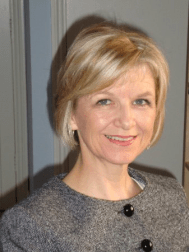 always with an emphasis on ensuring people have access to the knowledge they need to do their jobs successfully. I’ve worked in energy, pharmaceuticals, biotechnology, accountancy and professional services as well as in the legal sector.
The biggest change was in the 1990s when the emphasis on Knowledge Management as a business imperative allowed us the opportunity to take a more central role, making a difference across the whole organisation.
When I was a little girl, I wanted to run a cats’ home!
I like the motivation and behavioural side of KM – what makes people collaborate and how can we build on that? If I could combine that with more time travelling and experiencing different people and cultures, that would be perfect!
Expert, professional, customer-focused.
I suspect it’s the same in every KM role, especially when people are recording time by the hour; the lack of time people have to step out of their day to day work to contribute to seeking and sharing knowledge, to improve what we do.
The people in my team and in BLM generally. They are some of most friendly, supportive and professional colleagues I’ve ever worked with.
The ability for end users to be able to access so much for themselves now whenever and wherever they are. But along with that the expectation that we should have access to trusted, managed information automatically via a “google” type search.
Ensuring our lawyers remain technically competent, innovation, better KM technology.
The big area we are all watching is artificial intelligence. We will see how this develops in 2017!
Your role is so important! In a law firm, knowledge is your product and you are at the forefront of maximising the benefits from it. Keep continuing to focus on this and to communicate the value your lawyers and customers will see from the firm’s commitment to KM.
Thanks Fiona – and you are so right – KM is such an important support to fee earning and has great potential to maximise benefits.
If you want to read the next interview, follow the blog using the button at the top right or sign up for the busy-person’s summary.
If you are a Head of Knowledge, get in touch to share your story (or nominate your boss!).
With so much information generally available, it is increasingly important to know who is an expert in what knowledge within your organisation.
Most law firms have had some form of “White Pages” (an internal address book, adapted to an organisation’s individual needs) for a while now, but how well is yours working? Are you getting the most from the knowledge that already exists within your organisation?
How have you approached this challenge? I’d love to hear in the comments how you have approached creating a great experts database, or if you’ve enjoyed the post, please share.
What now?
It’s a tall order… being more “innovative”… but the legal world is changing and you need to keep up… easy to say … difficult to do.
If it’s on your agenda, hopefully this snippet summary will help:

Want to learn more? Now what?
I’m reading Dean Burnett’s “The Idiot Brain” at the moment (very interesting and worth a read).
One thing (of many) that struck me as relevant to KM and learning was from his chapter about memory and biases.
Apparently our brains don’t like to “criticise” our actions (by storing a negative memory) if they are fairly recent, but *can* criticise past events, as the ego is still happy because we’ve clearly grown and improved since the past event.
So how can this information help KMers?
I had two ideas.
Reflective learning and After Action Reviews are great ways for people to create and share knowledge from real-life experiences, but if they struggle to remember events in a way that could criticise their recent actions due to natural biases, how can we help them?
Firstly, for an AAR that needs to take place fairly soon after an event, we can take time and make sincere efforts to create a non-judgmental atmosphere, so that no one needs to feel criticised and everyone can feel they are on a non-judgmental journey of learning, with a focus on how much everyone has learned and changed. This is more easily done by having an outsider as facilitator, but you can follow the army advice about AARs to hold successful ones yourself (see article at the end).
Secondly, for effective personal reflective learning, we can concentrate on recording events and brief initial thoughts daily/weekly, but spend more time monthly/quarterly at looking for the learning points/criticising our actions/looking for gaps in our knowledge and also revisit old reflective learning diaries later on for new learning out of old experiences.
What do you think? Do you agree and if so, what other ideas do you have to improve our KM using this knowledge?
What now?
Read more here
Follow the blog using the button at the top right, or sign up for the monthly busy-person’s summary here.
Also, think about coming along to a KM: The Works day, when we cover learning and reflective learning as well as all the KM basics.
For Learning at Work Week I chose 5 of my favourite learning resources to share with everyone, and I’ve been tweeting them at 10am, 2pm and 5.30pm.
For those of you who missed them, here they are:
Did you do anything special for learning at work week? And what are your favourite learning resources?
Follow the blog using the button at the top right, or sign up for the monthly busy-person’s summary here.
 Knowledge for Lawyers